The Missing Piece of a Complete Epic: Palace of Illusions
The Mahabharata is often known for its larger than life heroes: the righteous Yudhisthira, the mighty Bheema, the peerless Arjuna, and the divine Krishna. As was customary in its time (and is customary still), the great epic largely lacks the female perspective. Chitra Banerjee Divakaruni's Palace of Illusions gives us a raw, unfiltered look into Draupadi's psyche, whose role in the Mahabharata was every bit as consequential but whose inner world and musings were unjustifiably overlooked.
Banerjee has done a brilliant job of humanizing Draupadi, which is a fresh breath of air after all the discourse you hear about the Mahabharata being depicted as a glamorous play between the divinities. It asks us to see its heroes (and villains) as flawed humans. Much of the contemporary discourse around Draupadi depicts her as a divine figure, but the book is brave enough to embrace her contradictions: her vanity, impulsiveness, sexuality, unbridled anger, vulnerability, and moral shortcomings.
However, being somewhat fascinated by the lore, I found myself delving deeper into other aspects of the Mahabharata as well, rather than focusing solely on the characterization of Draupadi. I've included some of those thoughts in this review, so an apology to the reader: this is not entirely a book review, but also an exploration of my own thoughts on the Mahabharata and the messages I take away from it. Props to the author for reigniting my interest in Hindu mythology.
The convenient righteousness of men
The book doesn't shy away from the patriarchal norms of that time. Women are considered less capable of critical thought, described as impulsive, and often deemed fit only for gossip. Drupad's decision to educate only Dhristadyumna is a fitting example of this. But seeing from Draupadi's perspective, the morality of the great Kshatriyas who live and die by their notions of honor and virtue is brought to question.
The venerable Bheeshma, the King of Bharat Dhritarashtra, the revered Dronacharya, all stayed silent while their daughter-in-law was disrobed in the royal court. What more can I say about the Pandavas, who did not utter a single word for their wife?
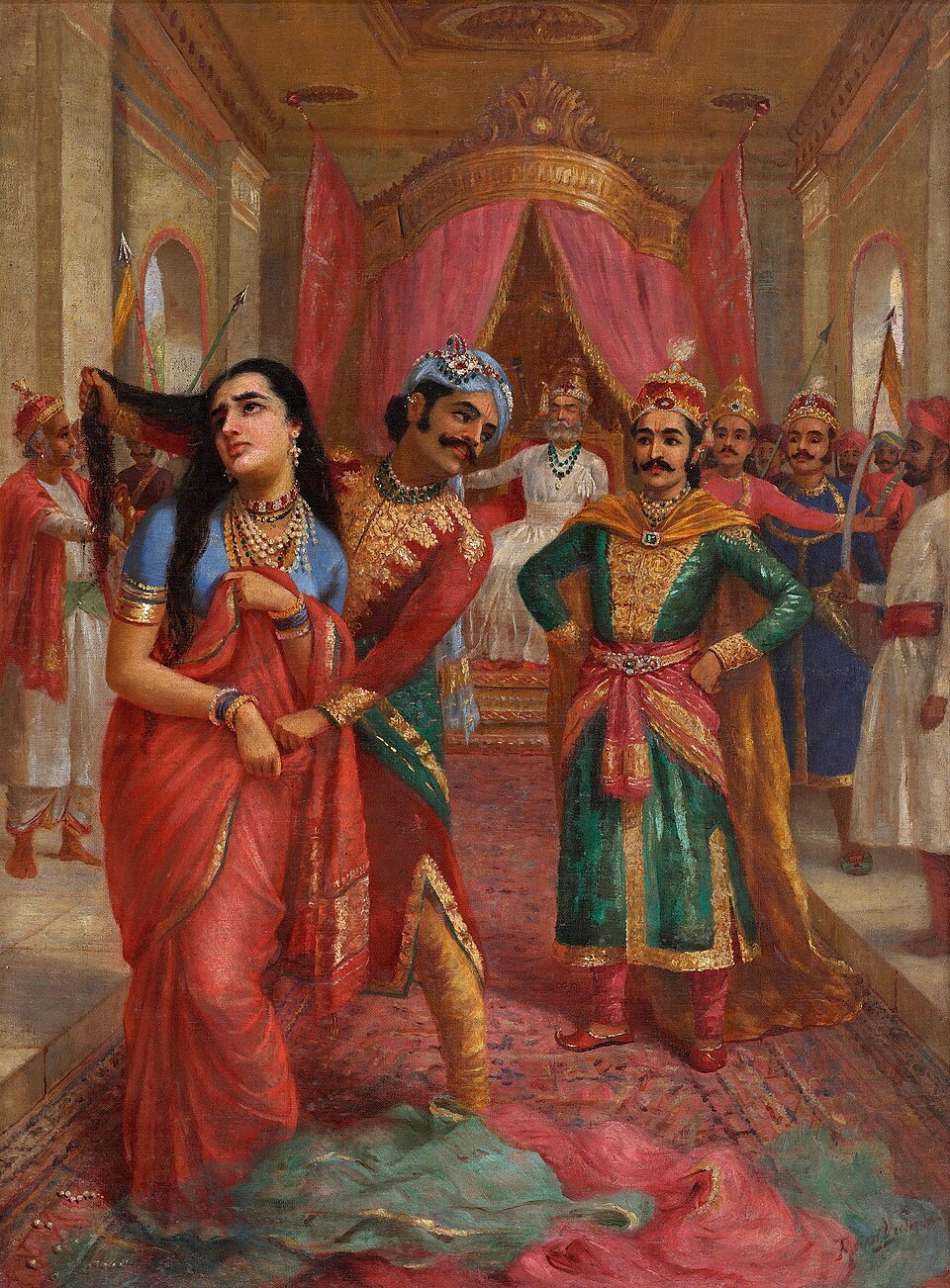
Even to call these great men - so revered for their honour, virtue, and adherence to dharma - hypocrites almost feels like an understatement.
Amidst all this, it is Dhai Ma's quote which perfectly highlights the selective righteousness and the hypocrisy of these men:
"A well-meaning man is more dangerous because he believes in the rightness of what he does. Give me an honest rascal any day!"
Yudhisthira
Adding to the farce of righteousness, I commend the author for being so critical of Yudhisthira. I wholeheartedly admit my judgement here is biased, but I have a particular disdain for people like him - perhaps more so because following people like Yudhisthira have had unwanted consequences in my life.
Often portrayed as a "bastion of morality", he is no less blind than Dhritarashtra when it comes to adhering to dogmatic principles of virtue. His undying passion for an ideal ascetic, however, could not rid him of his gambling problem - even justifying it as an "honorable warrior code" to accept a game of dice. Where were the echoes of his virtue when he gambled away his kingdom, his brothers, and his wife? What part of his dharma prevented him from standing up when such injustice was being done to his own wife?
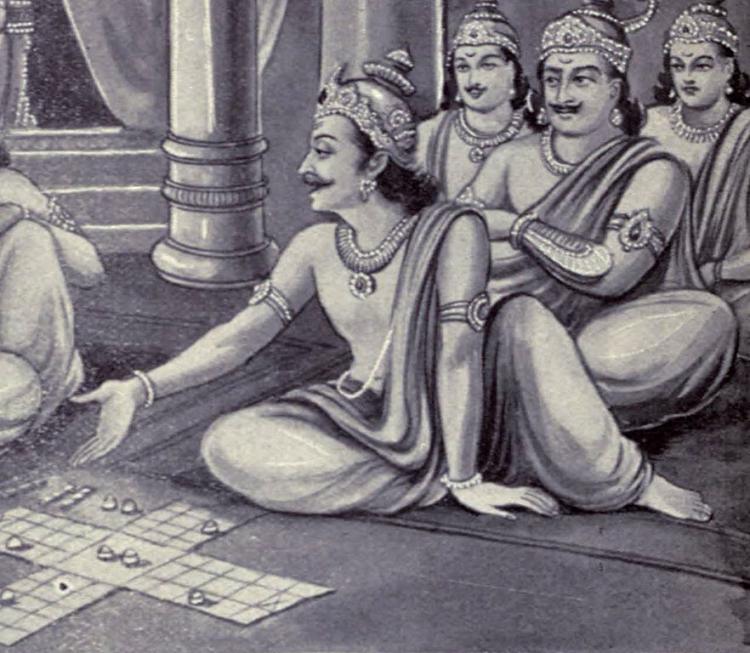
Even after losing almost everything, his instinct for appeasement remained. His willingness to compromise and submit for the sake of his conception of virtue puts a serious stain on his character.
As long as righteous men like Yudhishthira remain silent - hiding behind rules, institutions, and procedure, the vulnerable - Draupadi, Garima Chaudhary, and countless others - will continue to bear the cost of the wickedness of others.
Characterization of Draupadi
Moving on to the author's brilliant characterization and evolution of Draupadi, with some shortcomings that I will discuss later. Burdened by the woes of her fate, we can tangibly observe the change in Draupadi's thoughts, musings, and realizations as the story progresses.
She transforms from a carefree, somewhat reckless young girl into a woman whose humiliation, rage, and thirst for vengeance become catalysts for the Kurukshetra War. Banerjee does an excellent job at highlighting Draupadi's devotion to her husbands and how she fulfilled her duty and role as an honourable woman despite all the challenges.
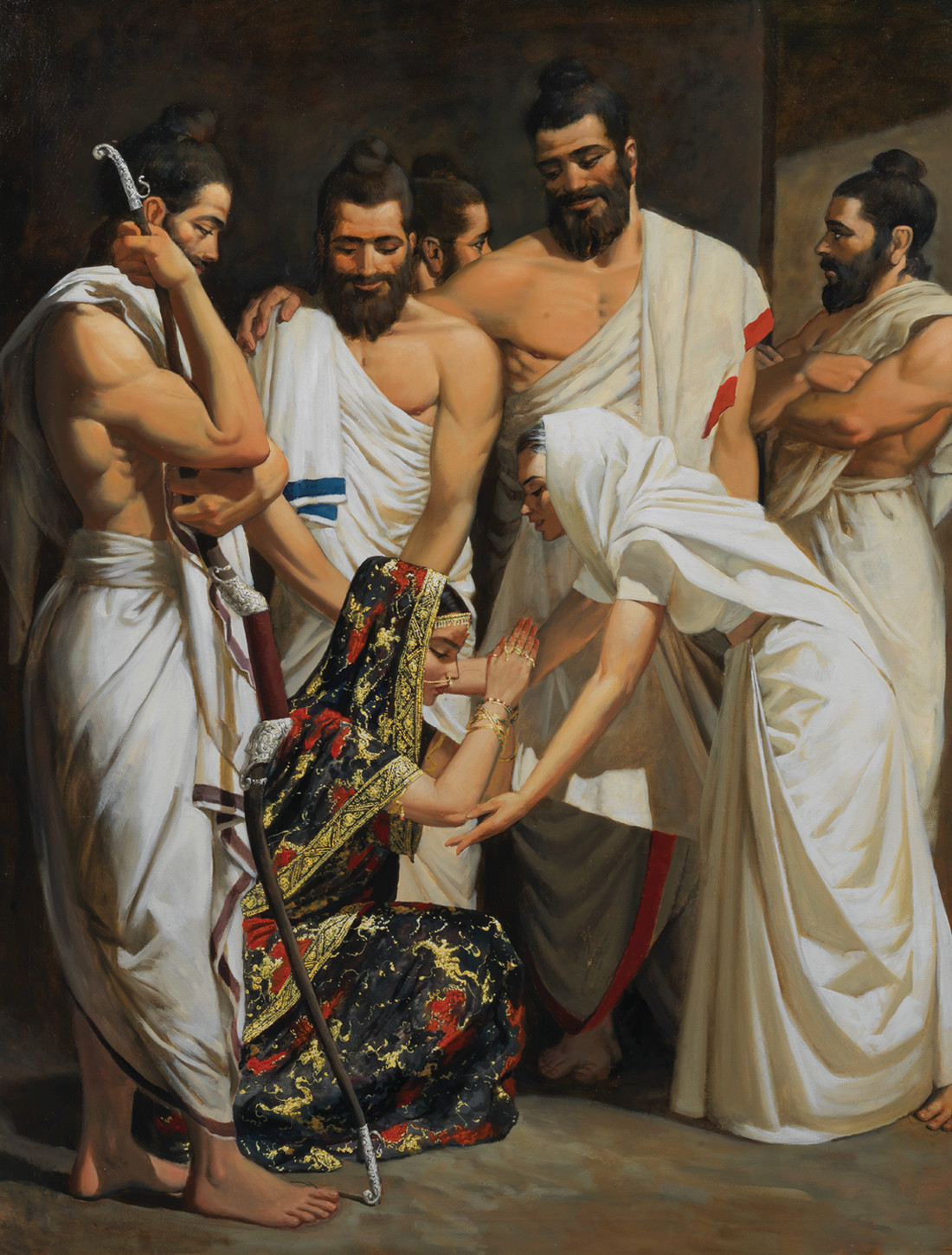
She willingly gives up her heaven-like abode to accompany her husbands in their exile, choosing to share their suffering rather than remain in comfort. Her intelligence is also evident in the way she challenges Dhrishtadyumna's tutor, refusing to accept the assumption that women are incapable of serious intellectual thought. At the same time, she is capable of humility, learning to navigate her relationship with Kunti even when her own pride is challenged.
Yet, Divakaruni does not portray Draupadi as an idealized heroine. Her vanity is evident throughout the novel, with her magnificent palace itself becoming almost a manifestation of her pride and self-importance. She can also be manipulative, particularly in the way she uses her influence over those around her to achieve what she desires. Her desire for vengeance, though understandable given everything she suffers, gradually becomes an obsession that blinds her to the consequences it will have for others.
Perhaps her deepest flaw - and perhaps even the author's - is her dismissal of Krishna's wisdom. Despite repeatedly hearing Krishna's profound and stoic reflections, Draupadi rarely seems to internalize them. She hears him, but does not truly contemplate or learn from what he tells her.
"Just as we cast off worn clothes and wear new ones, when the time arrives, the soul casts off the body and finds a new one to work out its karma. Therefore the wise grieve neither for the living nor the dead."
Krishna repeatedly gives advice like this and Panchali seems to brush it aside and immediately return to her grief, anger, and desire for vengeance. This is understandable from a human perspective - she has suffered immensely, after all - but it becomes somewhat frustrating when the novel repeatedly places Krishna's wisdom before her without showing that it meaningfully changes her worldview.
Karna
Karna, undoubtedly, is the central thesis of the novel, and Draupadi's dynamic with him is something I am not fond of. I believe the author does not do great justice by introducing this subplot without adequately justifying Draupadi's infatuation with him.
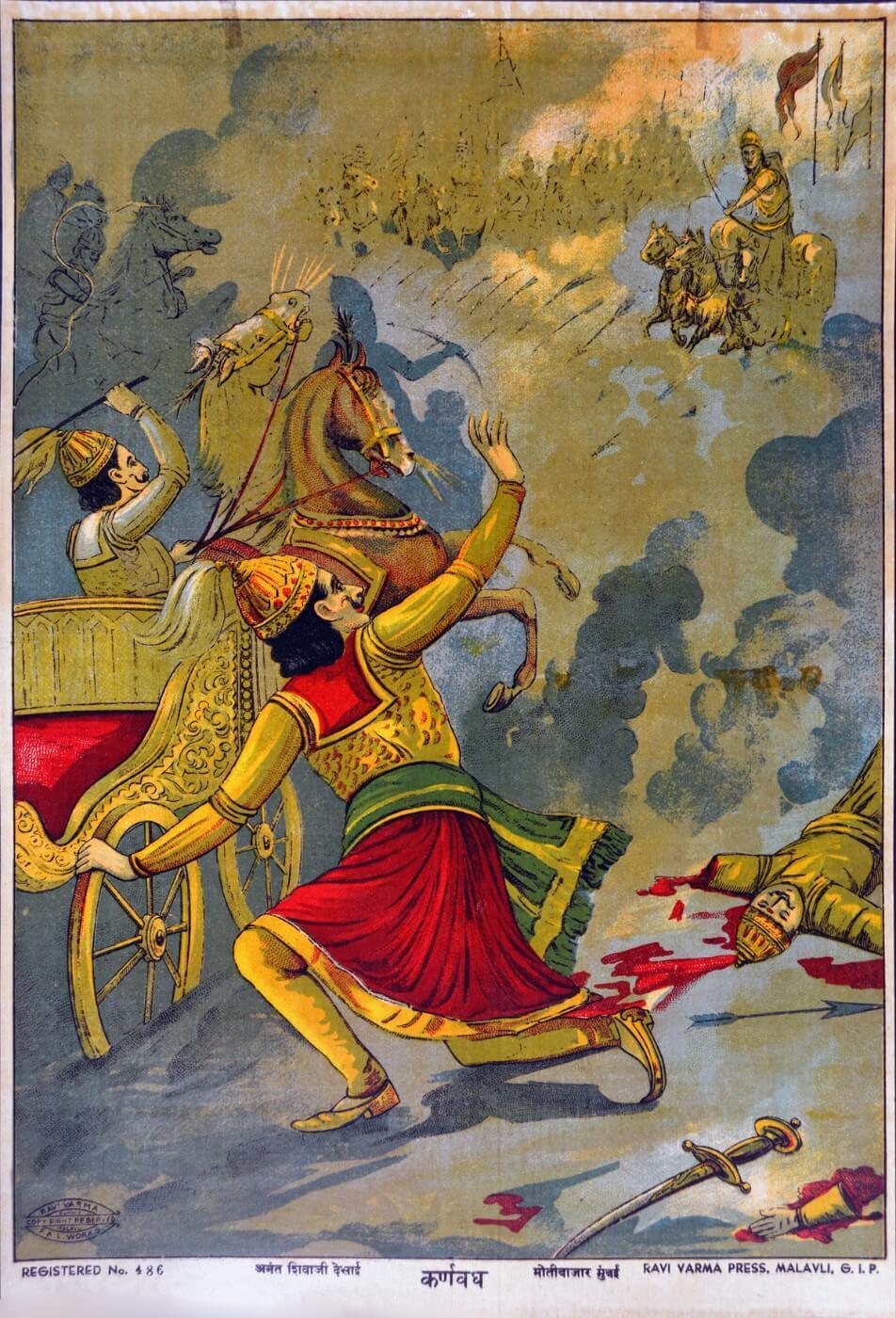
Stepping outside the pages of the book, it's important to recall that Karna is not the hero the book portrays him to be. It is right to say that Karna's story is tragic, but his tragedy does not absolve him of his sins - the most consequential of which - was targeted towards Draupadi.
It was Karna who called Draupadi a 'Vesya', something even the evil Duryodhan was bewildered upon hearing. It was Karna who suggested the idea of disrobing Draupadi. Yes, Karna's loyalty towards paying the debt of friendship for Duryodhan - who supported him when no one did - is truly admirable. But Karna is just as guilty as Shakuni for enabling Duryodhan's actions, which ultimately led to the destruction of the Kurus.
Draupadi is fascinated by a man who is, at the same time, one of the men complicit in her humiliation. The moral reality of Karna doesn't comfortably support the romantic significance she gives him. What exactly is Draupadi in love with? The man himself, or the possibility of what might have been, or the life she could have had with him? I wish the author had interrogated this dynamic more rigorously, because the novel sometimes seems more interested in preserving the romance of the contradiction than in asking what it reveals about Draupadi herself.
All in all, Palace of Illusions was a great read. Divakaruni has managed to compress the vastness of the Mahabharata without stripping away its complexity and grandeur, while successfully giving us a much-needed perspective of Draupadi herself. Despite its shortcomings, the novel reignited my interest in the Mahabharata and left me with much to think about.
And finally, thank you, to my dear friend Aakriti, for gifting me this book.