Between Two Kathmandus
As my grandfather (whom I call Baa) and I walked together through the drizzling rain, we spoke in a blend of Nepali and Newari, switching between the two for each new topic. I had accompanied him to his physiotherapy session; he had been experiencing pain in his left shoulder blade for some time. Usually, my mother accompanied him to his hospital visits, but I was finally back home after a while and I didn't want to miss out on the opportunity to spend time with him.
For most of my post-adolescence years, I had gradually lost touch with him because of excuses, which in hindsight, now seem meaningless. These minor ailments have a way of reminding you that your loved ones are growing older. I don't want to wake up one day burdened by the regret that I hadn't spent enough time with them.
We finally reached the bus stop where we waited for the Lagankhel bus. There, in the silence between us, arose an overbearing feeling of the gap that separated us. Not the generational gap per se, but rather the gap in how we both view the city that we call home. It was palpable in the cold, misty breeze that brushed against us both.
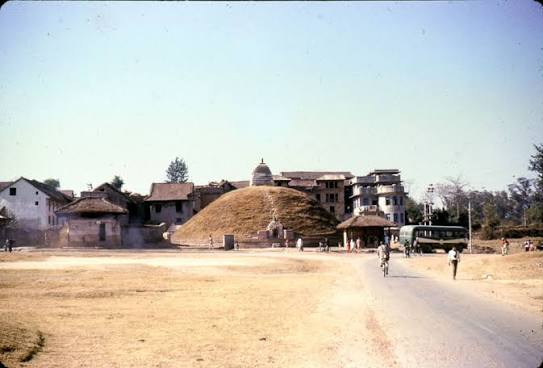
We were both born in the valley, not even a few kilometers apart. Yet, the place we both call home has transformed in such a way that the Kathmandus we both know are unrecognisable. If we were to put our versions of Kathmandu to paper, a stranger would find it hard to believe that we were describing the same city.
We were raised by two different Kathmandus.
Beginning with language, his proficiency follows this order: Newari, Nepali, then English. Mine is the exact reverse: English, Nepali, then Newari. Although Nepali is the language we are both second most familiar with, it is where we meet — a shared language that still leaves a noticeable barrier between us.
He grew up in an entirely homogeneous Newar society. He never stepped out of the Newar ecosystem; he still doesn't have any multi-ethnic friends, if any. Whereas I grew up in a classroom full of ethnic diversity — Rai, Limbu, Newar, Bahun, Chhetri, Madheshi, you name it. In fact, my first ever best friend was a Lama.
Much of this reflects Kathmandu's transformation following the political changes of 2046 and 2063 B.S., which brought significant migration into the Valley. The city that shaped me was far more diverse than the one that shaped my Baa. Today, I even count people from the Netherlands, Indonesia, and Mongolia among my friends — something that would have been almost unimaginable in his youth.
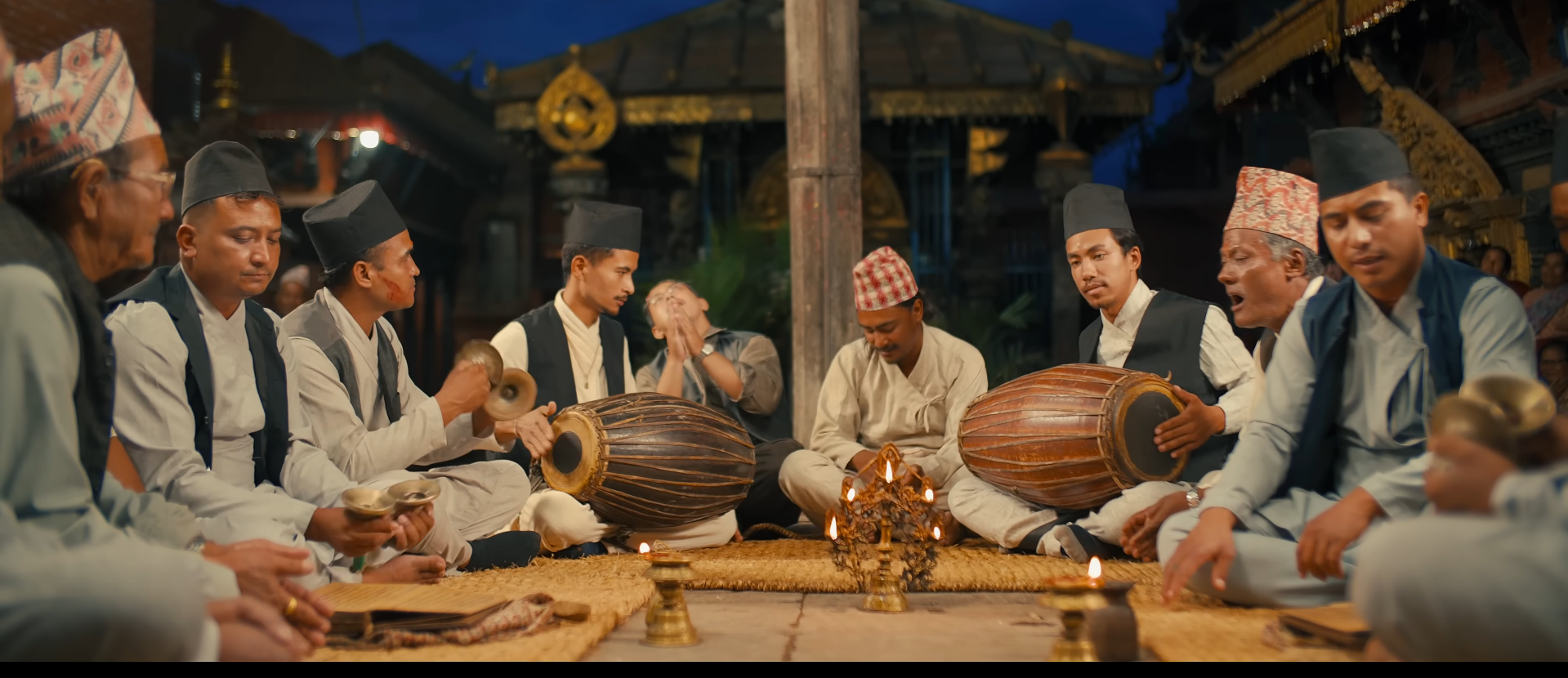
The music that he is familiar with is the sound of Newari bhajans sung at falchas. Even today, in old Newar neighborhoods like Balkumari — a hill above where I live — you can still find elderly Newars gathering each evening to sing bhajans. Those melodies were the soundtrack of his Kathmandu. Mine, on the other hand, was shaped by Bollywood hits and Justin Bieber playing through headphones and speakers.
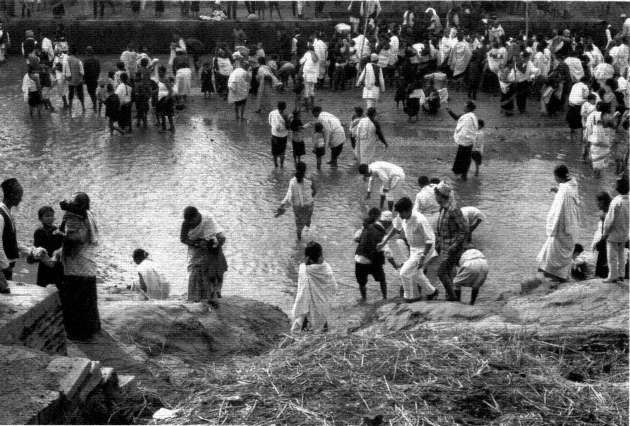
The Hanumante river near my home has been brown as long as I remember. The sewage could not accommodate the urban explosion of the banks that surrounded it. My Baa remembers a living river where people bathed and caught fish. I remember a polluted river. My children may remember no river at all.
All of this led me to a somber conclusion: my Baa embodied Kathmandu , but I can't say the same about myself. I no longer believe there can be a single poster child for the city in the way there could have been in my Baa's generation.
Does this mean that I want to go back to the Kathmandu that my Baa lived through? Of course not. I wouldn't make that trade. However, I've realized that the price for the growth of a city is ultimately the loss of its identity.
Perhaps that is the paradox of progress. The Kathmandu that shaped my Baa was unmistakably Kathmandu. The Kathmandu that I see today is richer in many ways, yet harder to define. Somewhere along the way, the city gained the world, but perhaps lost a part of what made it uniquely its own.